Bayern Munich Stuns Real Madrid 4-3 in Quarter-Final | Champions League
 Ethan Moore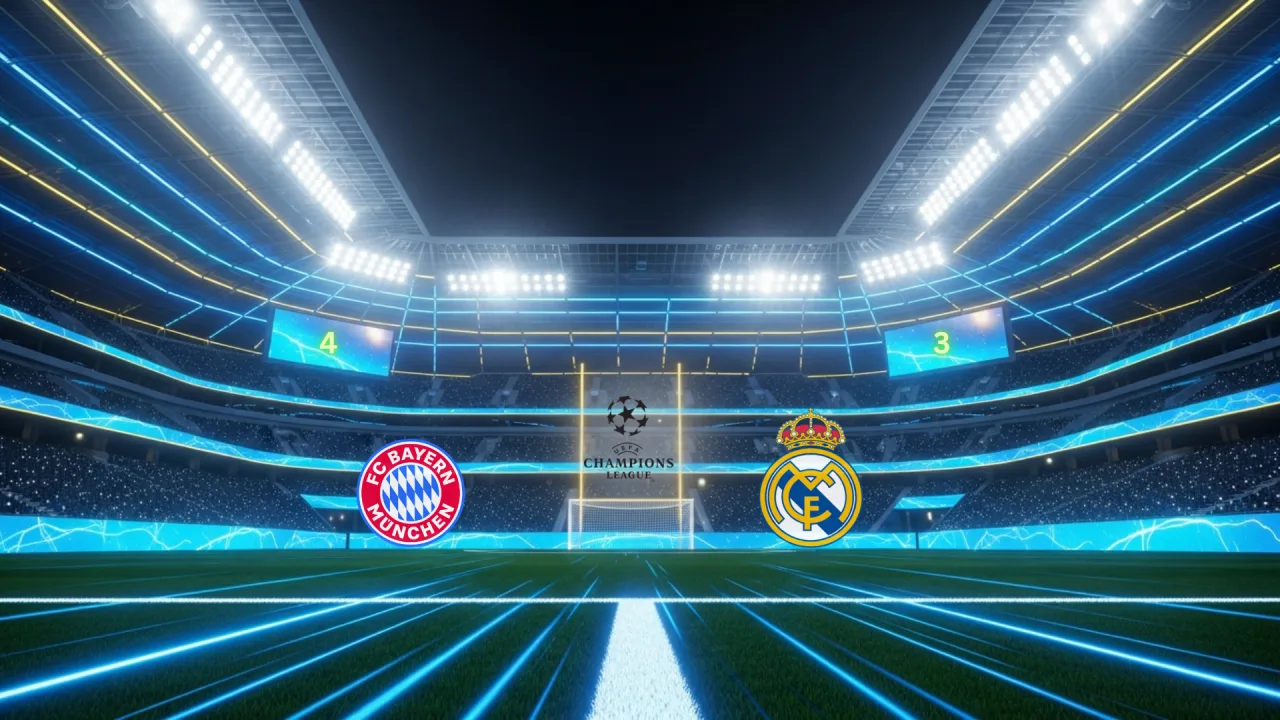
Key Takeaways:
- Bayern Munich defeats Real Madrid 4-3 in the second leg at Allianz Arena, advancing 6-4 on aggregate after a seven-goal epic featuring late strikes from Luis Díaz and Michael Olise.
- PSG and Atlético Madrid book semifinal spots with dominant and resilient performances, eliminating Liverpool and Barcelona respectively.
- Arsenal advances on a narrow 1-0 aggregate over Sporting CP, setting up mouth-watering semifinals: PSG vs Bayern Munich and Atlético Madrid vs Arsenal.
Quarter-Final Drama Unfolds Across Europe
Bayern Munich hosted Real Madrid in a high-stakes quarter-final second leg at the Allianz Arena, delivering one of the competition's most entertaining ties. The match exploded with five first-half goals before Bayern edged a 4-3 victory, advancing 6-4 on aggregate. Harry Kane and teammates capitalized on clinical finishing, while Real Madrid's defense faltered late with two red cards. Ousmane Dembélé starred for PSG with a double at Anfield, helping the defending champions secure a 4-0 aggregate win over Liverpool and confirming the English side's exit.
On the same night, Atlético Madrid held firm against a Barcelona fightback at the Metropolitano. Despite Barça leveling the tie temporarily with a 2-1 second-leg win, Atlético progressed 3-2 on aggregate thanks to resolute defending and key contributions, including from Julián Álvarez. Arsenal, meanwhile, managed a goalless draw against an energetic Sporting CP at the Emirates, preserving their 1-0 first-leg advantage to reach the semifinals for the second consecutive season. Mikel Arteta praised his squad's resilience in what he called a "big boost" for the club.
These results mark significant milestones: Bayern ends Real Madrid's long dominance in this fixture, PSG continues its title defense impressively, and underdogs like Atlético showcase tactical discipline. The outcomes eliminate two Spanish giants and a Premier League contender, reshaping the path to the Budapest final on May 30.
Semifinal Matchups Set and Rivalries Ignited
The 2025/26 UEFA Champions League semifinals feature two compelling ties: Paris Saint-Germain versus Bayern Munich (first leg April 28), and Atlético Madrid versus Arsenal (first leg April 29). Second legs follow on May 5 and 6. These pairings revive historical contexts—Bayern and PSG bring attacking firepower, while Atlético's defensive steel meets Arsenal's recent consistency. Head-to-head records highlight balanced but intense past encounters across UEFA competitions.
For the Champions League 2026 campaign, these developments carry weight beyond immediate results. The quarter-finals underscored the format's competitiveness under the expanded 36-team league phase, rewarding consistency while allowing dramatic comebacks or upsets. Eliminations of traditional powerhouses like Real Madrid and Barcelona signal shifting dynamics, potentially influencing future qualification coefficients and European Performance Spots—England has already secured an extra slot for 2026/27.
Football betting markets reflect the drama: pre-quarter-final favorites like Arsenal and Bayern remain prominent, with odds adjusting post-results to favor Bayern and PSG in their semifinal. Player markets highlight standouts—Dembélé's form boosts PSG's prospects, while Kane's contributions keep Bayern in contention. This volatility enhances punter engagement, as live betting on high-scoring ties or clean sheets becomes key. No regulatory shifts emerged, but the matches spotlight technology's role, including VAR decisions that drew criticism from Barcelona's Raphinha, who claimed his side was "robbed." Such incidents fuel debates on refereeing standards and fan experience.
The progression of clubs like Atlético demonstrates how tactical innovation and squad depth impact knockout stages, benefiting player development and viewer immersion. For betting stakeholders, clearer paths to the final allow refined odds on outright winners, with implied probabilities shifting toward the remaining four. These events elevate the tournament's prestige, driving partnerships and broadcast innovations that improve global accessibility.
Impact on Competition Integrity and Future Seasons
The quarter-final conclusions reinforce the Champions League's appeal as a merit-based spectacle. Bayern's victory over Real Madrid ends a streak of Madrid successes in recent meetings, proving that current form and home advantage can override historical pedigree. Similarly, PSG's efficient dismantling of Liverpool cements their status as defending champions with genuine repeat potential. Arsenal's gritty advance, despite domestic pressures, highlights mental fortitude as a differentiator in high-stakes environments.
These outcomes matter for the 2026 landscape because they influence coefficient rankings that determine future allocations, including additional spots for top-performing associations. The presence of varied styles—Bayern's fluidity, Atlético's organization, Arsenal's pressing, and PSG's star power—promises semifinals rich in tactical variety, enhancing spectator, betting odds and interest. Technology, particularly VAR, remains under scrutiny; controversies in the Atlético-Barcelona tie underscore needs for clearer protocols to maintain trust without disrupting flow.
From a player-experience perspective, progression rewards investment in depth and youth integration, as seen in emerging contributors across ties. For iGaming audiences, the semifinals offer layered opportunities: match-winner, over/under goals, and player props on talents like Dembélé or Kane. The structure encourages responsible betting focused on data-driven insights rather than hype. Overall, the 2025/26 edition's knockout phase so far exemplifies why the competition remains Europe's pinnacle, blending legacy rivalries with modern evolution.