
BettingRanker - Comprehensive Reviews of the Best Betting Sites in 2026




Top Betting Sites 2026
How We Rank
We rank casinos based on different factors that are important to a good player experience. The main ones are the following:

How We Evaluate Betting Sites
At BettingRanker, 11 checks run against every bookmaker before it earns a spot in any ranking on this site.
- Reputation – weighing verified player reviews, years in operation, and independent safety-index scores from aggregators like TrustPilot and AskGamblers, not marketing copy alone.
- Security – confirming TLS 1.2 or 1.3 encryption on every payment page and checking for a named RNG certification body, such as GLI, iTech Labs, or BMM Testlabs, rather than accepting an unverified "certified fair" claim at face value.
- Trustworthiness – verifying the license number directly against the regulator's own public register, whether that's the UK Gambling Commission, the Malta Gaming Authority, or the Curaçao Gaming Authority, since an unverifiable number is disqualifying on its own.
- Betting Bonuses – reading the actual wagering requirement, minimum odds, and expiry window in a bookmaker's terms, not just the headline match percentage on the landing page.
- Betting Odds – comparing a bookmaker's margin on its three or four biggest sports against the market average, since a 3% football margin and an 8% esports margin on the same site point a bettor toward two different conclusions.
- Markets and Betting Options – counting actual sports and bet types available, including accumulators, system bets, and live in-play markets, rather than describing coverage as simply wide.
- Deposit and Withdrawal Efficiency – timing real transactions across Visa, Mastercard, PayPal, Skrill, Neteller, PaysafeCard, and cryptocurrencies including Bitcoin, since a method listed in a cashier isn't the same as one that clears a withdrawal quickly.
- Global Reach and Localization – checking which countries can actually register and get paid, not just which currencies appear in a dropdown menu, since geo-restrictions and payment restrictions often diverge from each other.
- Bettor Prioritization – confirming deposit limits, self-exclusion tools, and clear terms exist inside the account settings themselves, not buried on a separate page nobody reads.
- Customer Support – testing live chat response time directly and checking whether phone support exists at all, since a "24/7 support" claim and a chat that actually answers inside two minutes are two different things.
- User Experience – navigating from registration through to a placed bet on both desktop and mobile, since a site that reads well in a screenshot can still fail during an actual live betting sequence.
A missing or unverifiable license is enough on its own to keep a site off this list, regardless of how it performs on the other ten checks.
After reviewing more than a thousand betting sites, the pattern I trust least is a flawless first impression. A slick homepage, a big headline bonus, and fast-loading pages tell you nothing about how a site behaves once you're actually up money. The sites that consistently earn a strong ranking here are the ones that pay a modest win exactly the way their terms say they will, on the first try, without a support ticket. That's a smaller, less flashy thing to check than odds or bonus size, and it's the one I weight heaviest when two bookmakers are otherwise close.





How to Educate Yourself on Sports Betting
The guide library here runs past 300 published pieces, covering everything from odds formats to sport-specific rules to bankroll math. The guide library splits into five categories, each aimed at a different gap in a bettor's knowledge rather than repeating the same beginner advice five times over. The five-way split matters more than it looks: a bettor who already understands odds conversion doesn't need to wade through a sports-rules primer to find the one page on bankroll math that's actually new to them.
Sports Betting Guides
Sport-specific coverage spans from football and tennis down to darts and snooker, and the depth changes by sport rather than following one template. Sport-specific coverage on football, for instance, breaks down leagues and tournaments individually rather than treating the sport as one block, since a Premier League accumulator and a World Cup outright bet call for different research entirely. The gap most bettors actually have isn't sport rules. It's current form, and that's where a guide built around one specific tournament earns its keep over a generic overview of a whole sport.






Betting Bonuses Guides
Bonus guides split into seven distinct categories here: sign-up bonuses, no-deposit bonuses, free bets, cashback offers, referral bonuses, no-wagering bonuses, and bonus codes. Bonus guides treat each category separately rather than as interchangeable versions of the same welcome offer, since a no-wagering bonus and a standard sign-up match convert to real, withdrawable money at completely different rates. The distinction that actually costs bettors money is wagering-requirement structure, not the headline percentage: a 100% match locked behind accumulator-only wagering at 5x can be worth less in practice than a smaller match with no wagering attached at all.


Payment Methods Guides
Payment coverage runs across four real categories: cards, e-wallets like Skrill and Neteller, bank transfers, and cryptocurrencies including Bitcoin. Payment coverage treats each one on the same four criteria every time: processing speed, fee structure, security setup, and whether the payment method actually works across borders or only within one region. The detail that usually decides a bettor's choice is the gap between a deposit and a withdrawal on the same method, since a card that deposits instantly can still take several business days to pay money back out.


Betting Strategies
Strategy coverage centers on three fundamentals before it ever reaches sport-specific advice: bankroll management, value betting, and variance. Strategy coverage treats bankroll sizing as math, not willpower alone, drawing on staking approaches like the Kelly Criterion, a formula developed by Bell Labs researcher John Kelly in 1956 that sizes a bet according to a bettor's actual edge rather than a flat percentage every time. The real value of a framework like that shows up in a simple case: a bettor with a genuine 60% win probability at even odds maximizes long-run bankroll growth by staking 20% of it, not by guessing a number that feels safe. Sport-specific strategy guides build on that same foundation, layering in factors like team form, player injuries, and weather once the bankroll math is already settled.




Betting Odds
Odds literacy starts with one conversion: implied probability equals 1 divided by the decimal odds, so odds of 2.00 imply a 50% chance and odds of 1.50 imply a 66.7% chance. Odds literacy also has to account for the bookmaker's margin, since implied probabilities across a full market almost always add up to more than 100%, and that surplus, often called the overround, is built-in profit rather than a rounding artifact. The margin's real size is easy to check: a two-outcome market totaling 104% carries a 4% edge for the house, and spotting that gap between a bookmaker's price and a bettor's own probability estimate is the entire basis of value betting, not a matter of gut feeling about which team looks strong.
Expert Recommendation: Football's where I'd start you off. You already know the teams, the form, the rivalries, and that's worth more than any stat sheet. Grab the cashback bonus over the sign-up match, that's real money back in your account, not a number you'll never clear. Skrill's the move for payments, same day both ways, no waiting around on a card. Sort your bankroll before you place a single bet, flat 2% stakes, that's saved me more than any pick ever has.
Who We Are
The team behind this content runs four distinct roles, not one generalist wearing every hat: a writer drafts the page, an expert checks the betting logic behind it, a reviewer audits the finished piece, and a fact-checker verifies every claim against a source before publication. The team's scale traces back to 2004, when the first CasinoRank blog published, and has grown since into a network covering 9 verticals and more than 70 markets today. The output that structure produces is real, checkable volume: over 1,000 betting sites reviewed, more than 300 sports betting guides published, and roughly 250 bonus offers checked every month for accuracy.
Trade publications including SBC News, iGaming Expert, and Gambling News have covered the network's own market data and analysis, a different kind of validation than a self-published claim of expertise.

Safety and Licensing
Three checks decide whether a betting site clears the safety bar here: real encryption on the payment side, an independently audited random number generator, and a license that holds up against the regulator's own public register. Any one of these failing is enough to keep a site off this network's rankings, regardless of how strong its odds or bonuses look elsewhere.
Security
Security checks start with the payment page itself, confirming TLS 1.2 or TLS 1.3 encryption is active rather than an older, breakable protocol still running in the background. Security checks also cover PCI DSS compliance for any site processing card payments directly, the same standard Visa and Mastercard themselves require of every merchant handling card data. The gap between a site that merely displays a padlock icon and one that actually passes these checks is real: a valid SSL certificate confirms the connection is encrypted, but it says nothing about whether the underlying payment processing meets a card network's own security requirements.
Third-Party Audits
Independent testing of a betting platform's random number generator comes from a small group of accredited labs, chiefly GLI, iTech Labs, and BMM Testlabs, not from a platform's own internal claim of fairness. Independent testing checks a specific, narrow thing: whether the software's outcomes match its declared mathematical model across millions of simulated rounds, not whether any single bet a person placed was fair. The best evidence of a passed audit is a clickable seal linking back to the lab's own verification page, not just the word "certified" printed somewhere on a site.
Licenses
Licensing claims get verified against a regulator's own public register, not taken from a site's self-description, since the three most common licenses, the UK Gambling Commission, the Malta Gaming Authority, and the Curaçao Gaming Authority, each publish a searchable list of who actually holds one. Licensing itself changed meaningfully in Curaçao specifically: the old system let four private master-license holders sell sub-licenses with limited oversight, and that entire structure was phased out between November 2023 and January 2025 in favor of direct licenses issued by the Curaçao Gaming Authority. The practical effect of that reform is that a current Curaçao license and an old sub-license aren't the same document, even though both get described the same way in casual conversation.
The license badge on a homepage tells me nothing by itself. The audit seal tells me a little more. What actually gets a site cut from my own list is a support agent who can't answer a direct question about their license number. I've asked that question dozens of times. A site that answers instantly passes something no badge can fake.

Responsible Betting
These tools work only when someone actually turns them on, and most people don't. These tools sat unused by more than 96% of customers in one major operator's own trial, even when the option to set a deposit limit was presented directly at registration. The gap between intending to gamble responsibly and actually setting a limit before the fact is the real problem research keeps finding, not a lack of available tools.
Set a Budget
A budget set before betting beats one decided mid-session, according to actual trial data rather than assumption. A budget only holds if it's hard to change, though: a randomized trial on voluntary deposit limits found that easy-to-raise, optional-size limits barely affected how much people actually lost, while limits that stayed fixed performed better. The practical lesson isn't to skip the tool. It's to set a number before a losing session tempts you to raise it, somewhere that takes real friction to undo.
Know When to Stop
Time limits exist on every licensed platform, and research keeps finding the same pattern: almost nobody sets one voluntarily, even though the option sits right there in account settings. Time limits work best as a fixed habit rather than a reactive measure, for the same reason deposit limits do: deciding mid-session that it's time to stop is exactly the moment self-control is weakest. The self-exclusion option underneath both tools is the blunter version of the same idea, a temporary or permanent block that removes the decision entirely rather than asking for willpower in the moment.
Support for Gambling Addiction
The table below lists a confirmed national helpline for markets with one central number. GamCare's International Support directory and findahelpline.com both list verified local services for every other country this network covers, since not every market runs a single unified helpline the way the countries below do.
Country | Helpline Number | Website |
|---|---|---|
United Kingdom | 0808 8020 133 | |
United States | 1-800-522-4700 | |
Canada | 1-866-531-2600 | |
Australia | 1800 858 858 | |
Sweden | 020-81 91 00 | |
Germany | 0800 137 27 00 |
A betting company without visible deposit limits, session tools, and self-exclusion access inside its own account settings doesn't make this network's rankings, regardless of how it performs elsewhere.
Latest news

Max Verstappen Dominates Singapore Grand Prix for First Win

Harry Kane Leads England Nations League Win Over Czech Republic

Zhuri and Powder Monkey Headline Yarmouth and Wolverhampton Racing
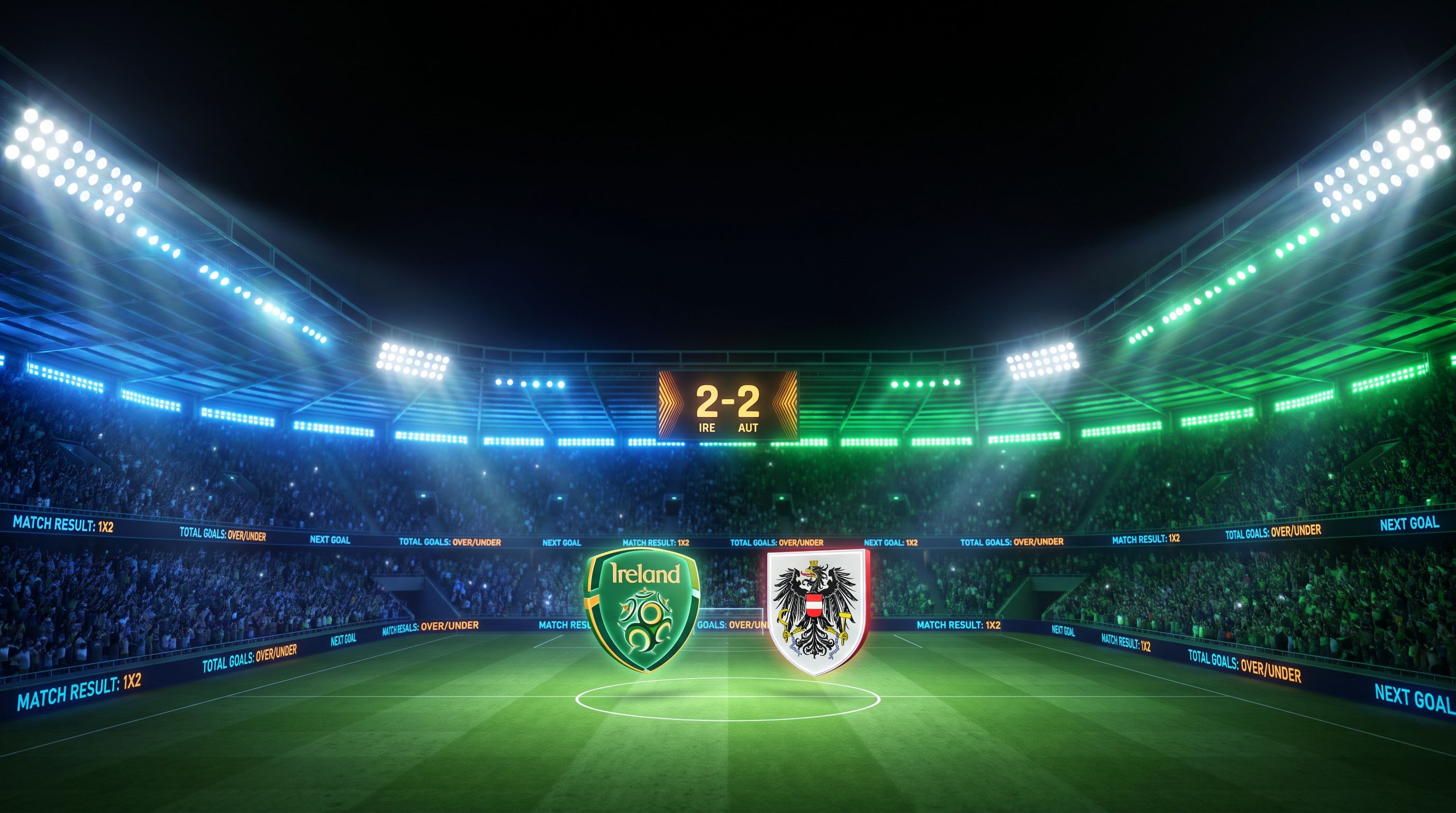
Troy Parrott Scores Brace in Ireland's 2-2 Austria Draw

England Secure 2-0 Nations League Victory Over Czech Republic

Jurgen Klopp Draws First Germany Match Against Netherlands
FAQ
Why was my bet voided or cancelled?
A voided bet returns your original stake with no win and no loss, settled at odds of 1.00. The most common triggers are a posted odds error, a postponed or abandoned event, or confirmed manipulation of the match outcome. Check the settlement note on the bet slip itself. Sportsbooks are required to state the specific reason there, not just mark the bet void.
Why do sportsbooks ask for ID verification before a withdrawal?
Identity verification, known as KYC, is a legal requirement, not a sportsbook-specific hurdle. Regulators require operators to confirm a customer's identity, age, and address before releasing funds, largely to prevent money laundering and underage access. The most common holdup is a mismatch between the name on the account and the name on the submitted ID, so double-check that detail before uploading anything.
Why was my account limited or restricted after I started winning?
Bet limiting targets stake size, not the account itself, and it's a real, documented practice rather than a myth. Sportsbooks reduce the maximum bet a specific customer can place, often after a string of wins on sharp, low-margin markets, to manage their own risk exposure. It's legal in most jurisdictions, though a growing number of regulators have started scrutinizing the practice.
Why can't I withdraw my bonus money?
Bonus funds stay locked until a wagering requirement is cleared, a fixed multiple of the bonus amount that has to be bet before any of it, or winnings from it, become withdrawable. Some sportsbooks restrict which bet types count toward that requirement, commonly accumulators only, so a bonus can look larger than it's actually worth to withdraw. Read the wagering terms before claiming a bonus, not after.
Why is my withdrawal taking so long?
Most withdrawal delays trace back to one of three things: an unfinished identity check, a payment method that doesn't match the one you deposited with, or an unmet wagering requirement still attached to bonus funds. Card and bank withdrawals typically take longer than e-wallets or crypto regardless of the sportsbook. Ask support specifically which of the three is holding your request, rather than just asking for a status update.
Can I withdraw using a different payment method than I deposited with?
Usually not, and this is one of the most common reasons withdrawals get rejected. Most licensed sportsbooks require withdrawals to return through the same method used to deposit, both as an anti-fraud measure and to comply with anti-money-laundering rules. If that original method doesn't support withdrawals at all, funds typically get redirected to a bank transfer instead.
Can a sportsbook change my odds after I've already placed a bet?
No, not without regulatory approval, and doing so has already triggered real enforcement action. New Jersey's gaming regulator ordered bet365 to refund over $519,000 to customers in 2024 after the operator unilaterally altered odds on already-placed winning bets, citing "obvious error" without the required sign-off. A sportsbook can void a genuinely mispriced bet before settlement, but changing the payout on one it already accepted is a different matter entirely.
How do I check if betting odds are actually fair?
Convert the odds to implied probability first: divide 1 by the decimal odds, so 2.00 becomes 50% and 1.50 becomes 66.7%. Add up the implied probabilities for every outcome in a market. That total will almost always exceed 100%, and the surplus is the bookmaker's margin, not a rounding error. A tighter total margin generally means a fairer price.